
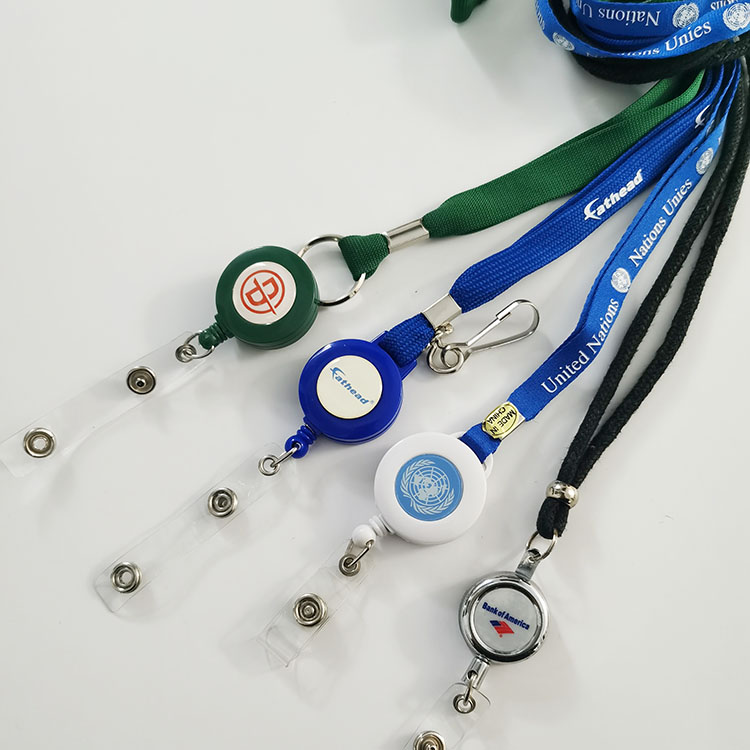
Retractable lanyards, also known as badge reels, are ubiquitous tools for secure and convenient access to ID cards, keys, and electronic devices in corporate, event, and industrial settings. China is the world’s leading manufacturer of these products, offering an unmatched combination of scale, customization, and cost efficiency. For importers, distributors, and corporate buyers, navigating this supply chain effectively is crucial. This guide provides a detailed roadmap for successfully sourcing high-quality retractable lanyards from China.
Understanding the Product and Specifications
Before contacting suppliers, define your requirements precisely. A retractable lanyard is a combination of a housing, a spring-driven reel mechanism, a cord, and an attachment clip.
Key Components to Specify:
Reel Housing: Material (typically ABS plastic), dimensions, and finish (matte, glossy, metallic plating). Custom molds can be created for branded shapes but involve high setup costs.
Cord: Material (usually nylon or polyester), length when fully extended (standard is ~80cm/31.5 inches), thickness, and color.
Mechanism: The internal spring is the heart of the product. Specify the desired retraction force and smoothness. High-quality springs ensure durability (often rated for 10,000+ pulls).
Attachment: The end-piece that holds the badge. Common options include a standard alligator/bulldog clip, a J-hook, a swivel hook, or a plastic sleeve. For safety, a breakaway connector can be integrated.
Top Attachment: How the reel itself attaches to the lanyard. This is usually a metal or plastic swivel hook or a split ring.
Customization: Printing (silkscreen or UV printing) or labeling (debossing, laser engraving) on the housing.
Sourcing Channels: Finding Reliable Suppliers
China offers multiple sourcing avenues, each with pros and cons.
B2B Online Marketplaces (Best for Most Buyers):
Alibaba.com: The largest platform, hosting thousands of manufacturers and trading companies. Use filters for “Verified Suppliers,” “Trade Assurance,” and assess transaction history and reviews.
Made-in-China.com & Global Sources: Also reputable platforms, often featuring more established factories.
Advantage: Unparalleled choice, competitive pricing, and built-in communication/payment tools.
Challenge: Requires due diligence to differentiate true manufacturers from middlemen.
Sourcing Agents:
An agent based in China (often in industrial hubs like Yiwu or Shenzhen) can manage the entire process: supplier vetting, negotiation, quality control, and logistics.
Best for: Large orders, buyers unfamiliar with China, or those lacking time for direct management.
Key: Work with transparent, well-reviewed agents and clarify their fee structure.
Direct Manufacturer Contact:
If you identify a specific factory through trade shows or industry directories, you can contact them directly. This offers maximum control and potential cost savings but requires strong project management and communication skills.
Trading Companies:
These firms source from factories and handle sales. They excel at managing smaller, customized orders and offer better English communication.
Note: They add a markup, so prices may be slightly higher than dealing directly with a factory.
The Procurement Process: Step-by-Step
Step 1: Request for Quotation (RFQ)
Send detailed RFQs to 3-5 shortlisted suppliers. Include:
Technical specs (as outlined above).
Target quantity (prices vary dramatically by volume).
High-resolution logo/artwork for customization (vector format preferred).
Packaging requirements (individual poly bags, bulk packaging, retail boxes).
Destination country for shipping calculation.
Step 2: Sampling – The Non-Negotiable Step
Pay for a pre-production sample. This is critical to assess quality, retraction smoothness, cord durability, and print accuracy.
Test the sample rigorously: pull it hundreds of times, check clip strength, and examine the finish.
Provide detailed feedback. A reputable supplier will correct issues and send a second confirmation sample.
Step 3: Negotiation & Proforma Invoice (PI)
Negotiate final pricing based on the confirmed sample and order volume. Key negotiable points are unit price, payment terms, and lead time.
Upon agreement, the supplier will issue a Proforma Invoice (PI), a formal contract detailing all terms. Review it meticulously before payment.
Step 4: Payment Terms
Trade Assurance (on Alibaba): Highly recommended for new buyers. Funds are released to the supplier only after you confirm satisfactory receipt of goods.
T/T (Bank Transfer): The most common method. A 30% deposit to start production, with 70% balance paid before shipment or against shipping documents.
Letter of Credit (L/C): Secure but complex, used for very large orders.
Step 5: Production & Quality Control (QC)
Maintain communication during the production lead time (typically 15-30 days for standard orders).
For orders over 5,000 units, consider a third-party pre-shipment inspection. An inspector visits the factory, checks a random sample against your approved spec, and provides a report before the goods are shipped. This is a vital risk-mitigation step.
Step 6: Logistics and Shipping
Incoterms define responsibilities. FOB (Free On Board) is common: the supplier delivers goods to the Chinese port, and you arrange and pay for main ocean/air freight and import clearance.
For smaller orders, DDP (Delivered Duty Paid) via courier (DHL, FedEx) is simpler but more expensive per unit.
Ensure all necessary documentation (Commercial Invoice, Packing List, Bill of Lading/Air Waybill) is provided correctly.
Key Considerations for Success
Focus on Mechanism Quality: The cheapest option often has a weak spring that fails quickly. Stress durability in your specifications and sample testing.
Communicate Clearly and Visually: Use diagrams, photos, and marked-up sample images to avoid misunderstandings.
Plan for Lead Times: Account for production, shipping, and customs clearance. Always buffer for unexpected delays, especially around Chinese holidays like Chinese New Year.
Start with a Smaller Trial Order: Before committing to a massive purchase, place a medium-sized order (e.g., 1,000-2,000 units) to evaluate real-world quality and the supplier’s reliability.
Conclusion
Sourcing retractable lanyards from China is a systematic process that balances cost, quality, and reliability. Success hinges on three pillars: clear product specifications, rigorous supplier vetting and sampling, and structured quality control. By leveraging China’s manufacturing ecosystem while implementing disciplined procurement practices, buyers can secure a high-quality, cost-effective product that meets exact branding and functional needs, building a foundation for a successful and lasting supply chain partnership.

一个回复
Checked out 992bet7… Looks promising. The user interface is intuitive, and they seem to have a decent range of options. Might be onto something good here. Always gamble responsibly! 992bet7